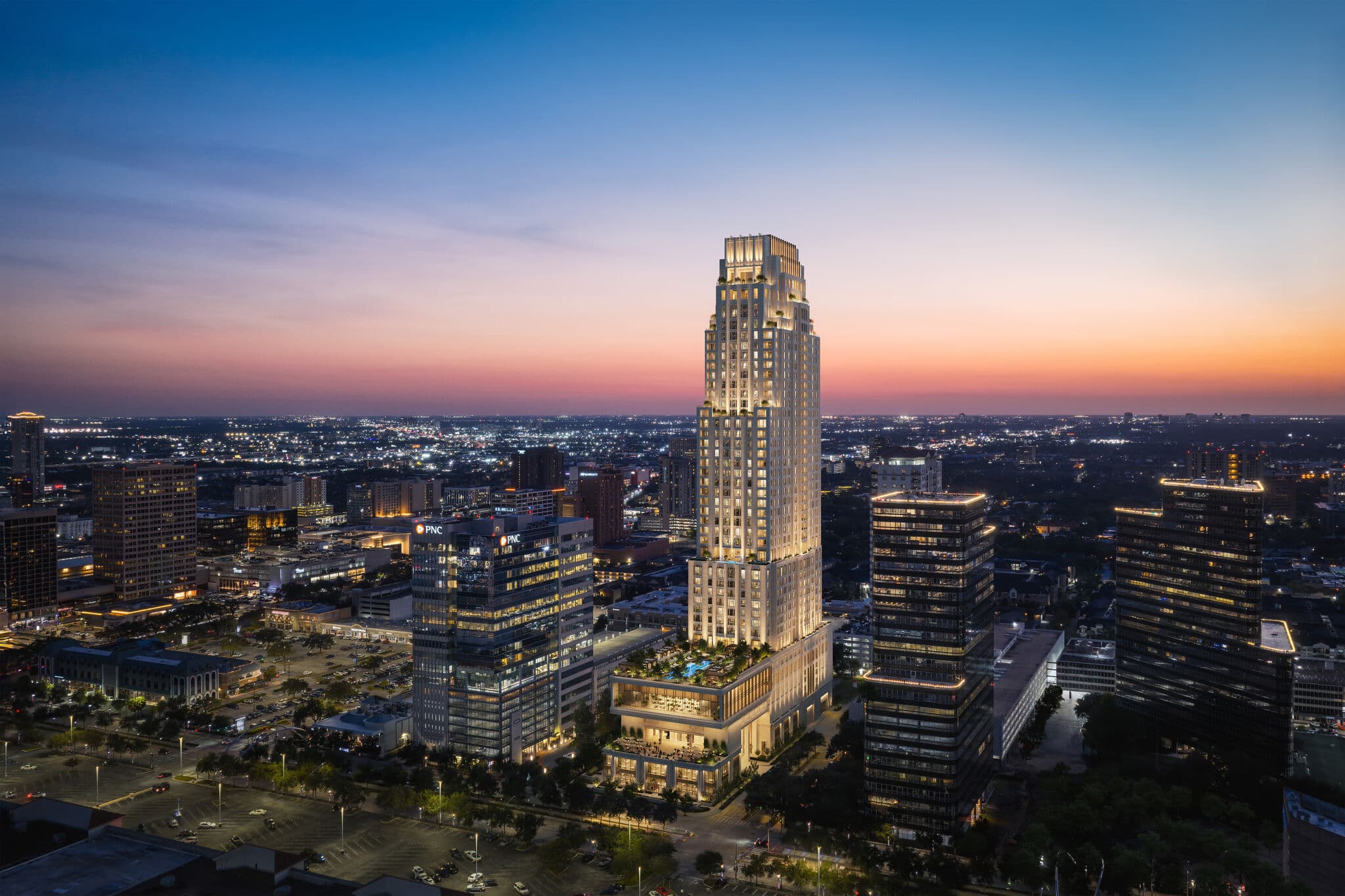
The pre-construction condo buyer is a specific animal. They are not shopping. They are deciding. By the time they submit an inquiry on your sales gallery form, they have already spent months comparing floor plans across three or four competing projects, studied the developer's track record, looked up the architect and the general contractor, and independently pulled comparable sales in the surrounding blocks.
They are not casual. They are not browsing. And when they do submit an inquiry, they expect a response that matches the seriousness of the decision they are trying to make.
They usually do not get one.
The Sales Cycle Is Long. The Decision Window Is Short.
The pre-construction condominium sales cycle typically runs 12 to 24 months from first inquiry to executed contract, per multiple industry surveys of new-build residential marketing. The buyer moves through awareness, interest, comparison, sales gallery visit, floor plan review, financial qualification, and reservation — each phase separated by weeks or months of internal deliberation, spousal alignment, and financial planning.
That long cycle creates a dangerous illusion for developers: the assumption that because buyers move slowly, response speed does not matter as much as it does for lower-ticket real estate.
It matters more.
Because the buyer who is deep in a 12-month research process has already narrowed their list to three or four towers. When they finally submit an inquiry — the moment where they cross the line from anonymous researcher to identified prospect — they are not making a first-touch inquiry. They are making a shortlist inquiry.
They are asking: of these three towers, which sales team is worth my Saturday morning?
The one that responds first, and responds well, gets the sales gallery visit. The other two get filed under “maybe next month” and never resurface.
The After-Hours Problem Is Structural in Pre-Construction
Pre-construction inquiries follow a distinct temporal pattern that most sales galleries are not staffed to handle.
Buyers researching multi-million-dollar condominium purchases do so on evenings and weekends — the times when they can pull up floor plans on a large screen, walk through renderings without interruption, and talk to a spouse or partner about the decision. Peak inquiry submission windows are Tuesday through Thursday evenings between 8 and 10 PM, and Sunday afternoons between 2 and 5 PM.
Sales galleries, meanwhile, are typically open 10 AM to 6 PM Monday through Saturday, closed Sunday, with on-site sales staff who leave the building at close. The buyer who submits an inquiry at 9:47 PM on a Sunday is submitting into a black hole until Monday at 10 AM — a 12-hour gap in which the same buyer, still in research mode, will very likely submit inquiries at two competing towers as well.
The tower that responds Monday at 10 AM is competing with the tower that responded Monday at 8:15 AM through an automated but well-designed follow-up sequence. Both are competing with the tower that reached out with a personalized voice callback at 9:52 PM on Sunday — five minutes after the inquiry landed.
At $2 million to $10 million per unit, the tower that responds within minutes does not just win the sales gallery visit. It anchors the entire remaining decision process. Every other tower is now the alternative, not the front-runner.
The Form-Abandonment Problem Is Bigger Than the Industry Admits
The larger and more expensive the transaction, the longer and more complex the inquiry form tends to be. Sales galleries collect name, email, phone, preferred contact time, floor plan interest, budget range, timeline, financing status, current residence, and referral source — often ten or more fields, sometimes across multiple screens.
Every additional field on a lead form measurably reduces submission rate. A 2024 HubSpot analysis of over 40,000 forms found that submission rates drop meaningfully with each additional field beyond four. Sales gallery forms routinely have twelve.
The result: the buyer who reached your sales gallery form is high-intent by definition. They researched your tower for months, clicked through to the inquiry page deliberately, and started filling in their name. Then they hit field seven — “preferred unit size” — realized they were not yet sure whether they wanted a two-bedroom or a three-bedroom, closed the tab, and told themselves they would come back to it.
They almost never come back. And your developer-side analytics show them as a bounce, not a lost lead.
That is the invisible revenue leak. It is not the buyers who never inquired. It is the buyers who started to inquire and did not finish.
The Portfolio Problem Compounds the Single-Tower Problem
For developers or exclusive sales agencies managing multiple active towers simultaneously, the form-abandonment problem does not add linearly. It compounds.
A single tower with a 40% form-abandonment rate is losing meaningful revenue. A portfolio of eight towers with a 40% average form-abandonment rate is losing that revenue eight times over — plus losing the ability to identify which tower has the highest-quality inquiry pipeline, because the abandoned inquiries never enter the CRM to be scored, ranked, or attributed.
Portfolio-level marketing directors optimizing paid media across multiple developments are effectively flying blind on the exact input that would tell them where to reallocate spend: which tower actually gets the most serious inquiries per dollar of media spend, and which tower is bleeding qualified prospects at the form.
The fix is not more media spend. The fix is capturing what is already there.
What Actually Works at the Sales Gallery Level
The pre-construction sales funnel is structurally different from lower-ticket residential in three ways that shape what recovery infrastructure looks like:
One — the inquiry is worth much more. A recovered inquiry on a $4 million unit is not equivalent to a recovered inquiry on a $400,000 unit. One inquiry recovered per month per tower typically covers the annual investment in any recovery infrastructure several times over.
Two — the buyer is patient across a long decision window. The abandoned inquiry from three weeks ago is often still an active prospect today. A well-designed follow-up sequence that treats the buyer as still-deciding, not as a bounce, has a much longer runway to reconvert than in short-cycle residential.
Three — the buyer expects concierge-level responsiveness. At luxury pre-construction price points, the buyer is not just judging your tower. They are judging your operation. A 60-second AI voice callback that references the specific floor plan they were researching signals a caliber of sales team that a Monday-morning email from a generic address does not.
The developers and exclusive sales agencies that build recovery infrastructure into their sales gallery funnel — not as an afterthought, but as a first-class layer of the marketing stack — capture inquiries that would otherwise vanish, close a higher share of the ones that come through, and know within hours which specific tower is generating the most qualified pipeline.
The tower down the street is not doing this. That is the opportunity.